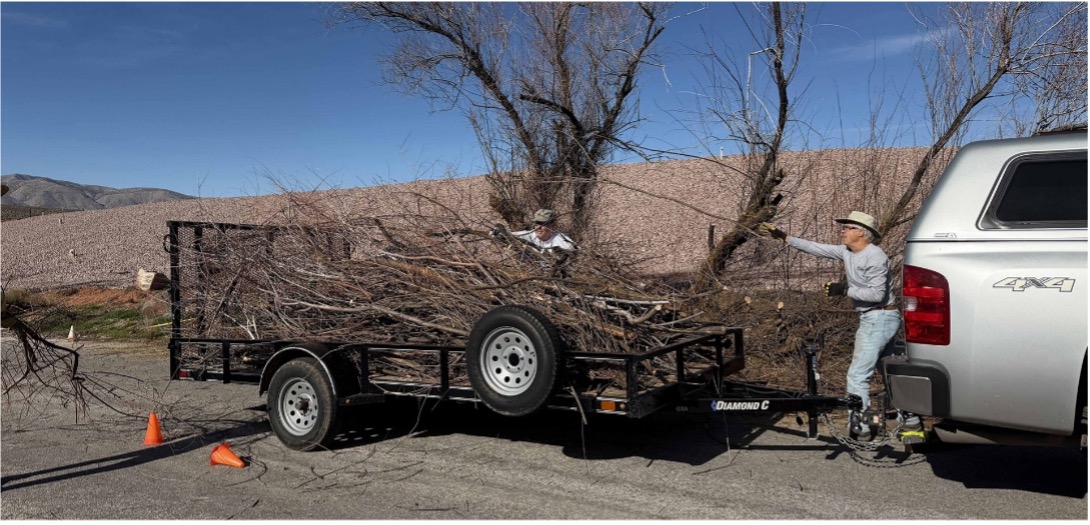
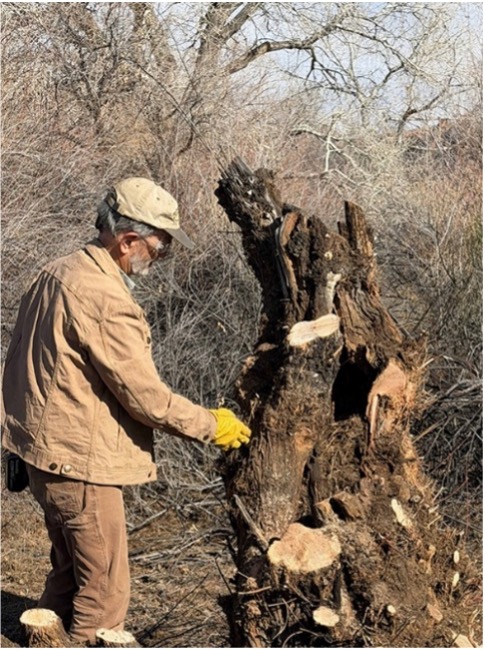
The discovery of two massive rats’ nests as the Desert Preservation Initiative cleared invasive species and dead plants from along Crescent Moon Trail road is indicative of both the danger and neglect that untended local habitats present to our community.
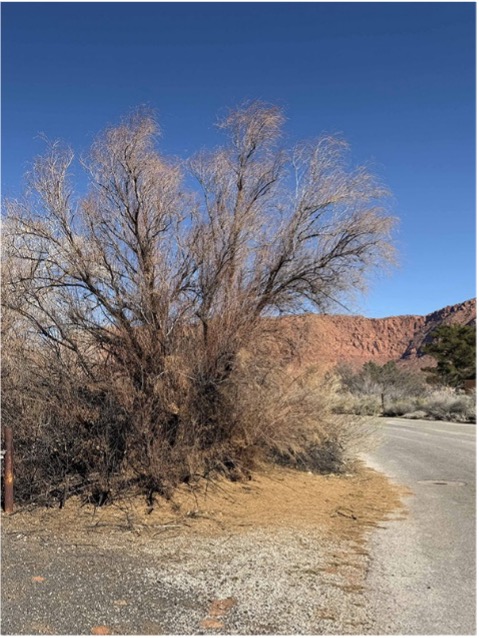
Working on land owned by the Ivins Irrigation Company, the project site tackled in January and February is “a very public area, frequented by those enjoying the park, reservoir and visiting at Crescent Moon Inn, Elevate Fitness, etc.,” says DPI Director Chuck Warren. Fire Lake is frequented throughout the year by local residents as well as guests at the Crescent Moon Inn. The full load of highly flammable tamarisk and other plant debris that has collected there for perhaps the last 50 years presents a real concern of fire caused by a passing vehicle or a tossed cigarette.
In the context of current state and city initiatives to identify communities at risk in the wildland-urban interface, this piece of land is particularly vulnerable. Based on his four years working in tamarisk removal, Warren finds “this location ranks as one of the most alarming I’ve seen, given the enormous fuel load and street proximity.” Noting that embers in a wildfire can be carried more than a mile, a fire started here could travel great distances.
The generous work of DPI volunteers could help lower the likelihood of Ivins neighborhoods being labeled high risk and seeing homeowners potentially face risk related fees and higher insurance rates. “Removing tamarisk infestation is one way, perhaps the most-effective way, of reducing a community’s risk level,” says DPI volunteer and Ivins City Councilman Wayne Pennington. “DPI’s efforts are well-aligned with this goal.”
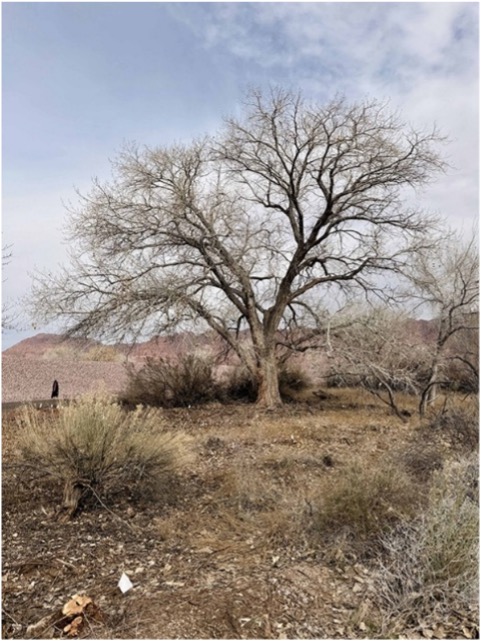
While the project is yet ongoing, the work so far has shown tremendous progress. “Visually, things look so much better already!” says DPI President Deonne Knill. “It’s almost a park setting now.”
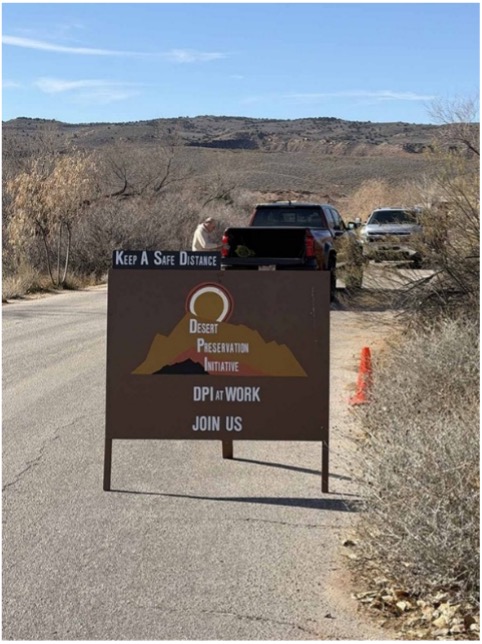
The site’s visibility paid off in another way. As a fair amount of foot traffic passes along the dam area on the way to the lake, Knill found a number of “people stopping by to ask us questions and compliment our work,” she says. Those conversations also gave DPI volunteers the chance to educate those they spoke with about the need for habitat cleanup and maintenance.
“We are not a paid labor force,” says Karl von Graevenitz. We are simply grateful that community members come to join in this effort.” While von Graevenitz particularly likes the physical side of removal, the satisfaction of “putting in a few hours of effort and immediately seeing the progress we’ve made together,” the deeper payoff is “knowing that our efforts help protect the natural beauty of the desert and support the broader community that values and depends on these open spaces.”
Given the tremendous infestation of tamarisk around Fire Lake itself, DPI is currently working to assess the site and explore further removal actions with the appropriate local agencies.