Preserving the Health and Beauty of the Natural Habitat
Kayenta Connection May 2026
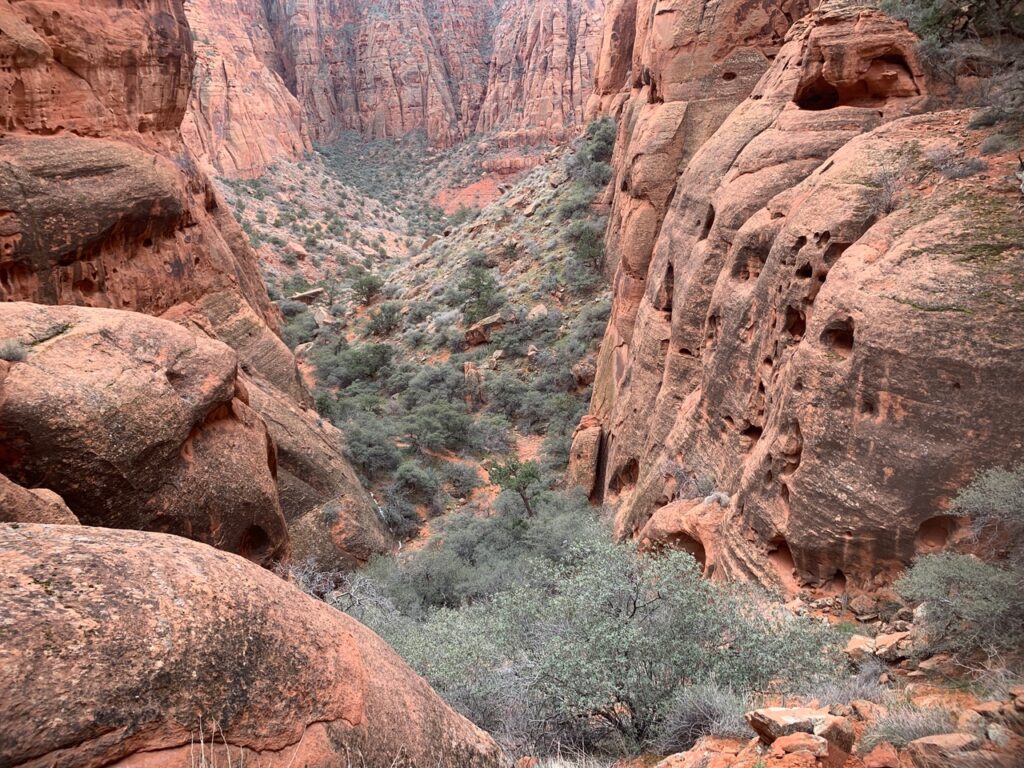
Preserving the natural beauty of southern Utah—the intricate landscape woven by the flow of water, the stunning geological formations shaped by weather and time, the infinite forms and colors of plants native to the area—needs help. As nature is impacted by man, both intentionally and not, the survival of our local beauty needs monitoring and care.
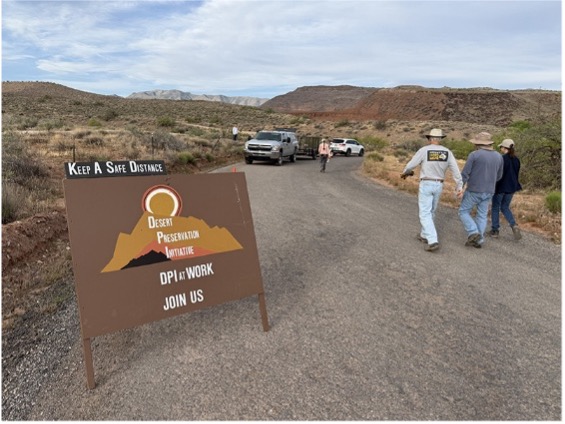
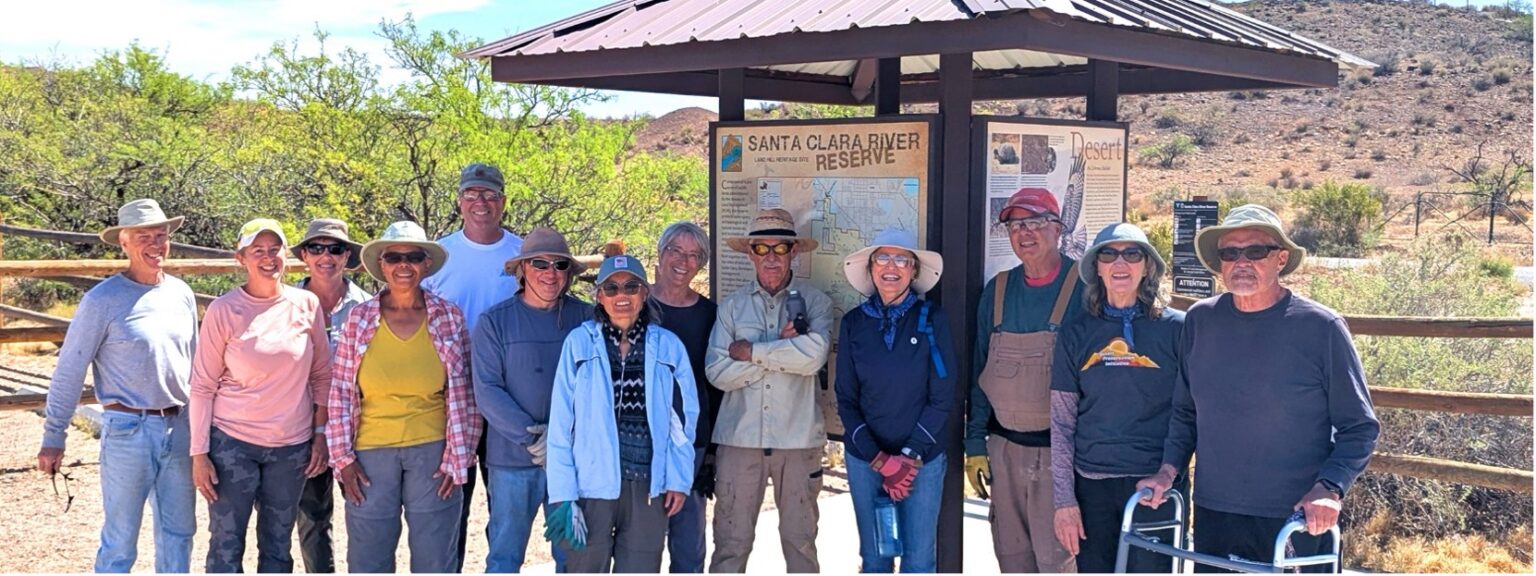
Such considerations are among the driving motivations of the Desert Preservation Initiative (DPI), currently partnering with the Bureau of Land Management to remove the invasive tamarisk at the Anasazi Trailhead just off Highway 91 in Ivins. At this site where visitors can follow easy trails to see some of the most magnificent petroglyphs in the area, DPI volunteers are working to help restore the natural habitat.
”Our team is excited to give back in an area that is visited by so many people every day. We feel honored to work on these protected lands that hold so much history,” says DPI President Deonne Knill.
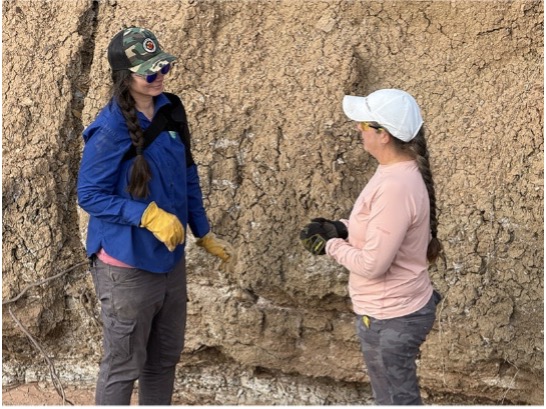
The opportunity to work with and through the BLM came about at a meeting between Knill, April Subashe, Director of Native Plant Rescue of Southern Utah, and Stephanie Taylor, a wildlife biologist with the St. George BLM office. Learning about DPI at that meeting, Taylor was “impressed with how motivated they are” about doing the hard physical work required.
Well aware of “how quickly tamarisk gets out of hand and chokes out native species,” Taylor became a proponent of the project and helped shepherd it through the various levels of review and approval needed for DPI to work on BLM land. Working as a volunteer crew, DPI provided the majority of the labor, with Taylor on site to review the process and make sure the land was not disturbed. “We worked together on the planning and logistics of our field-day efforts,” says Knill.
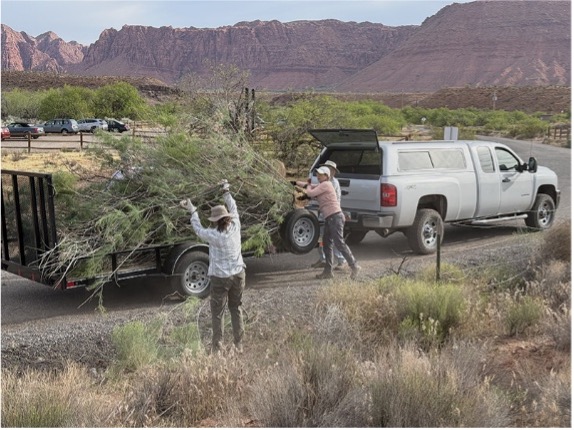
The Anasazi project involves about 16 tamarisks ranging in size from small, young bushes to clumps the size of a van and close to 20 feet tall. Clearing them involves cutting and treating the stumps with herbicide, then following up quarterly to monitor the site for potential regrowth, which demands a commitment by the DPI volunteer team for at least a year. But anything less will not, ultimately, make a difference. As DPI founder Chuck Warran notes, “No native plants can survive in intense tamarisk groves. Beyond the dangerous fuel loads in these areas waiting for a wildfire, few animal species live in tamarisk infestations, the primary one being wood rats.”
Knill points out that the way in which tamarisk drive out other species is very clear on the Anasazi site, where “you can see tamarisk growing within native mesquite trees. You can see the mesquite leaning away from the tamarisk, trying to escape the invasion. Our work will save these trees and allow them to recover.”
Ultimately, this kind of collaboration with the BLM can be important to future projects, as DPI increases its focus on the Santa Clara River drainage area, where the BLM plays a key role. Beyond the preservation of the historic artifacts and beautification of the Anasazi area, this project offers DPI volunteers opportunities “to make a concrete difference in the health and wellbeing of the desert, to reduce fire danger, to build community and to create new friendships,” says Chuck Warren.