As recognition of the negative and dangerous impacts of the invasive tamarisk spreads throughout Washington County, more residents are reaching out to the Desert Preservation Initiative for help in ridding their properties of this menace. Recent removal projects in Ivins and St. George signal a growing understanding of how this problem affects us all.
Ivins residents Barry Wood, who works in cybersecurity, and his wife Meltem, a linguist and AI content consultant, learned about DPI during a visit to the Kayenta Arts Festival. There, they learned about “your proficiency in tamarisk removal, which got me thinking about finally getting rid of our own tamarisk,” Barry says. “Had I known earlier what a fire hazard it was, I would have taken action to get rid of it much sooner.”
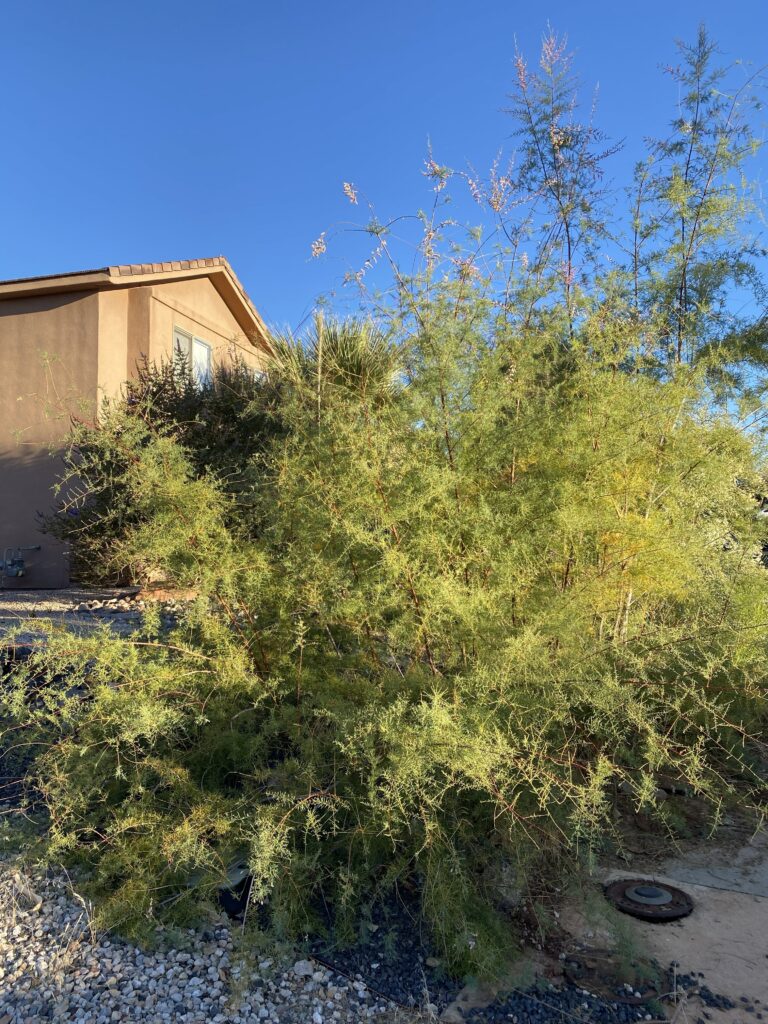
Having cut down a tamarisk infestation on their property for a number of years, only to have it grow right back, the Woods were delighted to have DPI volunteers come to their home to help remove the tamarisk and teach them how to solve the problem permanently. The growth on their property was “big enough to make you have to step off the sidewalk to get around it,” Barry adds, “and it was also kind of an eyesore.”
Barry Wood, who grew up in Connecticut and went to school on the East Coast, had never even seen a tamarisk before moving to Utah. Once he took on trying to get rid of it, he found it “interesting to see just how stubborn a tree can be.” At the same time, he was interested to learn from DPI’s brochures about the history and status of tamarisk in this area.
Brandon Rogers, whose parents live in Santa Clara, has visited the area since he was a kid and has “always loved everything about it.” He now owns a home in St. George where he plans to move permanently when his time in the Air Force, which included service in Afghanistan, Iraq and Latin America, is complete next June.
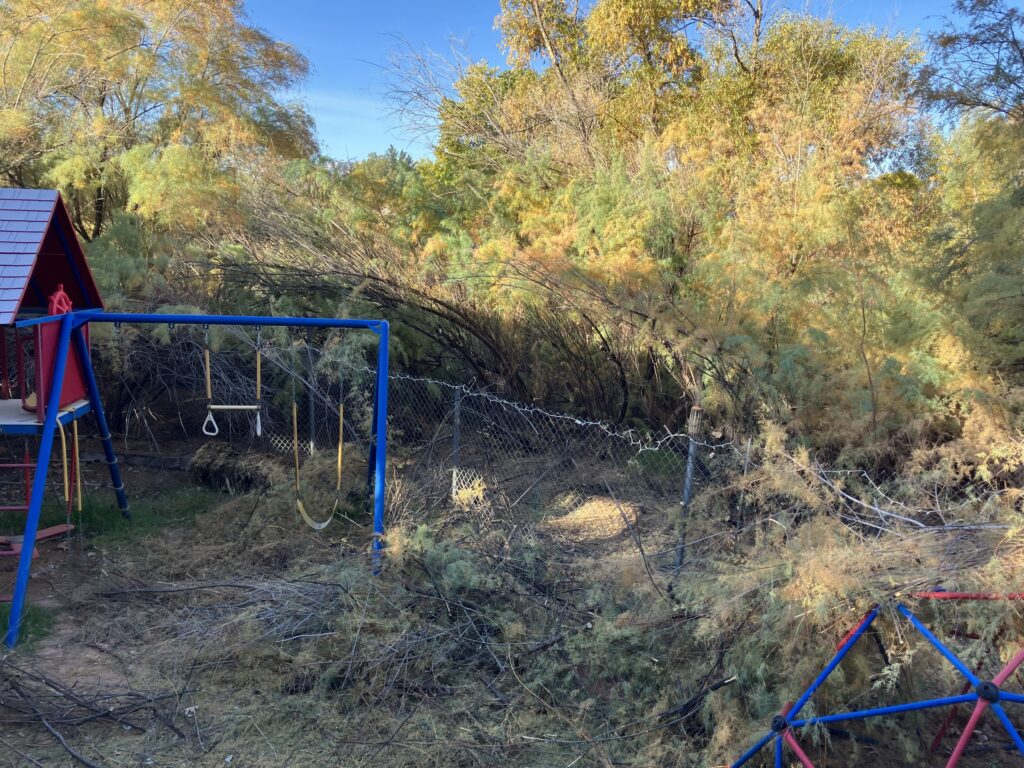
Preparing to move his family here, Brandon wanted to get rid of the tamarisks “dangling into my kids playground area. I was also extremely worried about fire hazards since I have pines in my yard and I learned about the potential for those to catch fire if the tamarisks did,” he says. He began by researching tamarisk removal in the area and learned about DPI. “I came across your articles and wanted to become a member to learn the process.”
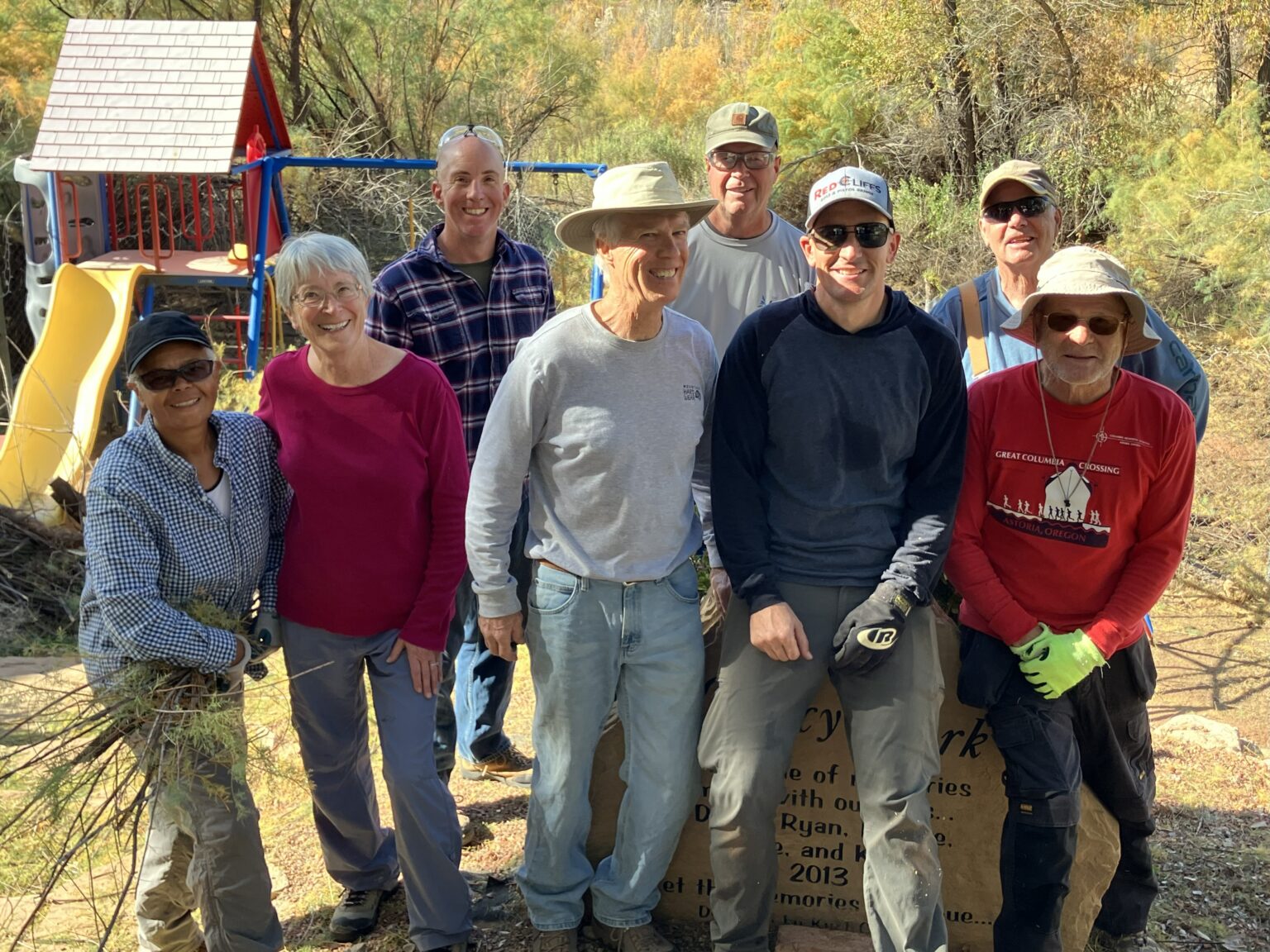
DPI President Chuck Warren came by to assess his situation with the resulting project being the largest tamarisk removal in the fall season. Eight volunteers helped Brandon load 1900 pounds of debris into this truck and trailer. “It would have taken me months to do that alone,” Brandon says, “I was so happy because I only had four days to get the work done before returning to Edwards Air Force Base in California.”
Further work on his property remains to deal with running water nearby and tamarisk infestations on neighboring lots. But what has been accomplished thus far has made a tremendous difference because Brandon also wanted to have a view of the mountains in the distance and the willow trees in the wash. With the removal done so far, new vistas have opened up. “Now you can watch the woodpecker at work in the willow,” he says.
If you are interested in having DPI assess your property for tamarisk removal, or if you’d like to get involved in our watershed protection and restoration efforts, please send us an email [email protected] or a message on our website https://www.desertpi.org/contact-us/#contact_form.